Resource · Studio & enterprise delivery
How to Brief a Graphic Designer: What to Send, a WhatsApp Brief Template and How Revisions Work
 By Kashif RehmanPublished 17 September 2026Updated 17 September 20268 min read
Short answer
A good design brief tells the designer what the piece must achieve, who it is for, every size needed, the real deadline, the final Urdu and English text, your logo as a vector file, a few references, a budget range and who gives final approval. Send it as one message and collect feedback in rounds.
Most delays on a design job happen before any design starts. A client sends "need a poster for our event, urgent" and a photo of an old banner, and the next three days go into questions: what size, what date, which phone number, is the logo the green one or the blue one, who is the chief guest, does the principal need to see it first. None of that is the client's fault. Nobody told them what a designer needs.
This page is the list I wish every client had before the first message. It works whether you are hiring the studio, a freelancer in your city or an in-house designer.
Why does a brief matter so much?
A designer can only design what they know. When the brief is thin, the designer fills the gaps with guesses, the first draft misses, and the "revisions" are really the brief being written one message at a time. That costs you time, and on print jobs it can cost money if the press slot is missed.
A complete brief also gets you a more honest quote. A single social post and a full event kit with a backdrop, standees and a sponsors wall are very different amounts of work. If I can see the whole list on day one, I can quote it once and plan the order of work around your print deadline.
What should you send a designer?
1. The goal
One or two sentences on what this design has to do. "Get parents to call for admissions before 15 March" is a goal you can check afterwards. "Make a nice poster" gives the designer nothing to aim at. The goal decides what goes biggest on the page.
2. The audience
Who will see it and where. Parents scrolling Facebook at night, students walking into a hall, drivers passing a shop on the main road. A post for WhatsApp status is designed differently from a 20 x 10 ft board, even with identical text.
3. Sizes and formats
List every piece you need, with sizes. For print, give sizes in feet or inches as your printer quotes them, and mention the material if you know it (panaflex, art paper, PVC card). For digital, name the platform: Instagram post, Facebook cover, WhatsApp status, YouTube thumbnail. If you already have a printer, share their name and contact. They often have their own requirements, and many local presses ask for CDR files.
4. The deadline, working back
Give the date you need the finished thing in hand, then leave room for printing. Panaflex can often be printed within a day or two, but offset jobs such as brochures, wedding cards and letterheads usually need several days at the press, and boxes take longer still. Near events, Eid and elections, every press in town is busy. If your event is on the 14th, plan for final approval about a week earlier.
5. Final copy, in both languages
Send the exact words, typed, not in a photo or a voice note. Check spellings of names, titles, dates, venues and phone numbers before you send, because these are the mistakes that end up printed on 500 cards.
For Urdu, type the text in Unicode, the way you type on WhatsApp or in Google Docs. Text copied out of InPage often turns into broken characters when pasted into other software, so if your Urdu lives in InPage, send the InPage file as well as a PDF of how it should look. Tell the designer which language leads. The Helping Hand Institute admissions post below leads in English and puts the eligibility rule on the artwork, and that kind of balance is easier to plan when both texts arrive together.

6. Logos in vector format
A logo cropped from a Facebook post or a phone photo of a visiting card will look soft on a panaflex and blurry on a box. Ask for the original file in one of these formats:
Logo files, from most useful to least
| Format | Works for | Notes |
|---|---|---|
| CDR | Print, local presses | CorelDraw file, the most common in Pakistani print shops |
| AI or EPS | Print and digital | Illustrator formats, open in most design software |
| PDF (vector) | Print and digital | Fine if it was exported from the original vector file |
| SVG | Web and digital | Good for websites, sometimes needs cleanup for print |
| PNG, high resolution | Social posts only | Acceptable for small digital use, not for large print |
| JPG or WhatsApp photo | Reference only | Designer will need to redraw it |
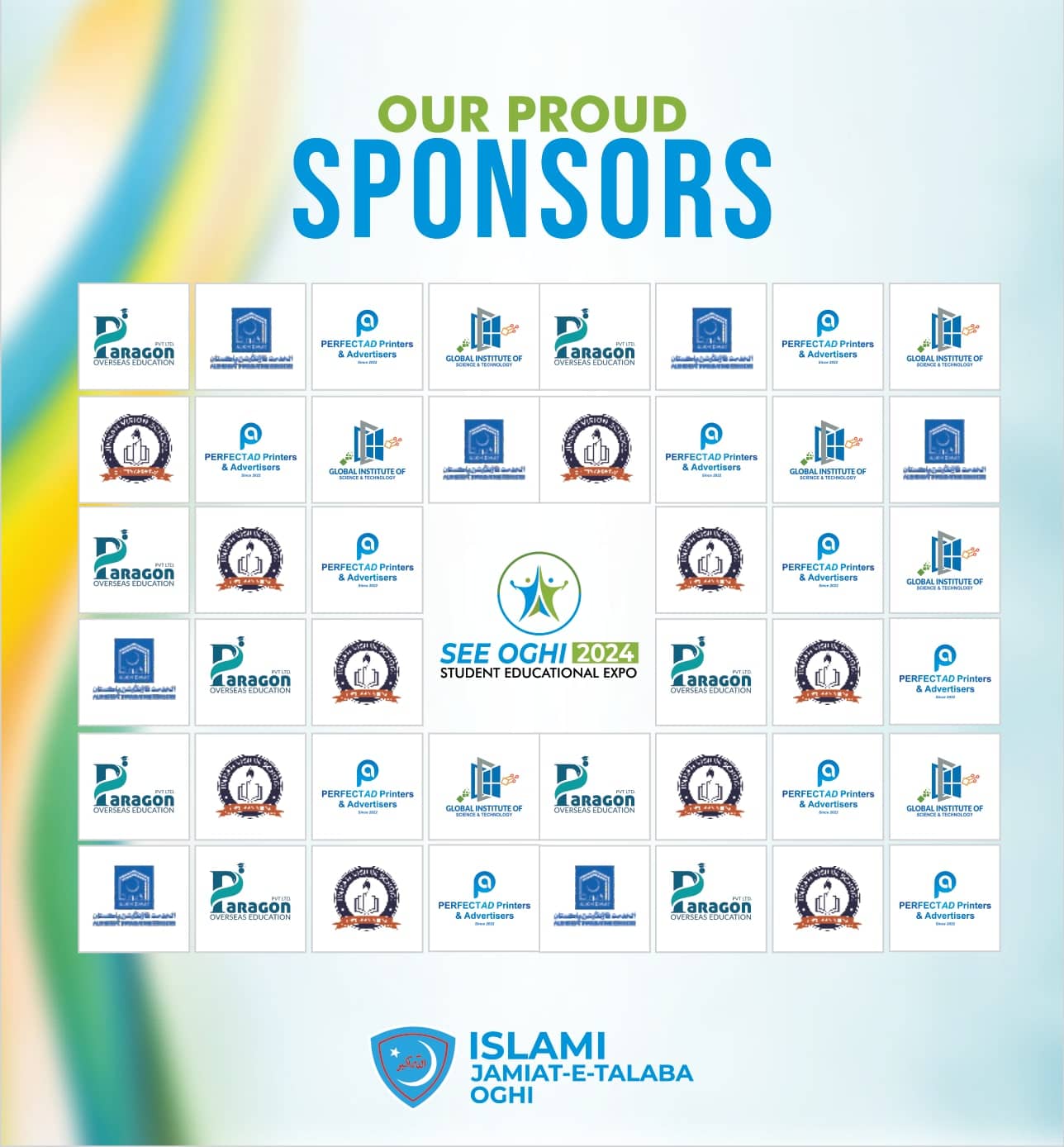
Also send the logos of partners, sponsors or government bodies that must appear. A sponsors wall like the one for SEE Oghi 2024 needs every sponsor logo in usable quality, so start collecting them on the first day.
7. References
Send three to five examples of work you like, and one or two you do not. Say what you like about each, whether that is the colours, the calm layout or a bold Urdu headline. References help the designer understand your taste, and a good designer will use them as a starting point for original work.
8. Budget range
A range is enough, and it helps more than people expect. It tells the designer whether to propose a full event kit or a strong main post plus a simple banner. Also say whether printing is inside that budget or separate. If you are not sure what things cost, say so and ask for options at two levels.
9. One approver
Name the one person who gives final approval. On organisation and school jobs, this is where most time is lost: the design goes to a committee group, six people reply with six opinions, and the designer gets contradicting changes. Collect feedback on your side, then send one combined list from the approver.
A WhatsApp brief template you can copy
Copy this, fill in what you know, delete what does not apply and send it as one message. Attach logos and references as documents, not as photos.
*DESIGN BRIEF*

Project name:
Organisation / business:

1. Goal (what should this design achieve?):

2. Audience (who will see it, and where?):

3. Pieces needed (item + size + print or digital):
   -
   -
   -

4. Deadline:
   Event / launch date:
   Final files needed by:
   Printer name and contact (if any):

5. Final text
   English:
   Urdu (typed, not a photo):
   Phone / address / social handles:

6. Logos (attach CDR / AI / EPS / PDF / SVG):
   Other logos that must appear:

7. References (3-5 links or images + what you like):

8. Budget range (and is printing included?):

9. Final approver (name + number):

Anything else the designer should know:
How do revisions work?
Every designer sets this out a little differently, so read the quote. The way the studio usually runs a job:
- First concept. Based on the brief, I send one or two directions as low-resolution previews. At this stage, react to the overall direction: layout, colour, tone.
- Revision rounds. You send one list of changes. I apply the whole list and send the updated design. Many designers in Pakistan include around two such rounds on the chosen direction; confirm what your quote includes.
- Final proof. You check every name, date, number and spelling with fresh eyes. This is the last free moment to catch a typo.
- Final files. Print-ready files for the press and correctly sized exports for social media are delivered.
What counts as a revision is a change within the agreed direction: a line of text, a photo swap, a colour adjustment. A new layout from scratch, a new size added later or text that changes completely after approval is new work, and it is fair to expect a charge for it.
Checklist
Giving feedback that speeds things up
- Collect everyone's comments first, then send one list
- Number each change so nothing is missed
- Be specific: "make the phone number bigger" beats "make it pop"
- Mark text corrections on a screenshot or retype the correct text
- Say what is working too, so it does not get changed by accident
- Check names, dates and numbers yourself before final approval
- Approve in writing, in the same chat, so there is one clear record
What happens after you send the brief?
I read it, ask the questions that are still open, usually only a few if the template is filled in, and then send a quote with the list of pieces, the number of revision rounds, the delivery date and whether printing coordination is included. Work starts once the quote is agreed.
For events, the order of work matters as much as the brief. The event branding kit checklist in this series covers which pieces to design first and how to plan backwards from event day. If your job includes a panaflex or any printed piece, the print-ready file checklist explains what the press will ask for, so the files and the brief line up.
FAQ
Questions people ask.
What should a design brief include?
At minimum: what the design is for, who should see it, every size and format needed, the deadline including print time, the final text in Urdu and English, your logo in vector format, a few references, a budget range and the name of the one person who approves. With those in hand, most designers can quote and start the same day.
Can I send my brief on WhatsApp?
Yes, most clients in Pakistan do, and it works well if the brief arrives as one complete message instead of twenty voice notes. Type the text so it can be copied, send logos and reference files as documents so WhatsApp does not compress them, and keep the whole project in one chat.
How many revisions do designers usually include?
It varies by designer and by job, so check the quote. Many freelancers and small studios in Pakistan include two rounds of changes on the chosen concept, with extra rounds or a new direction charged separately. Collect all feedback from your side into one list per round, since that is what makes a round count.
What if I don't have my logo in vector format?
Ask whoever designed it, or the press that printed your last visiting cards, for the CDR, AI, EPS, PDF or SVG file. If nobody has it, the designer can redraw the logo as vector. That is a separate small job and worth doing once, because every panaflex, box and card after it will use that file.
From reading to doing
Want Kashif to handle this for you?